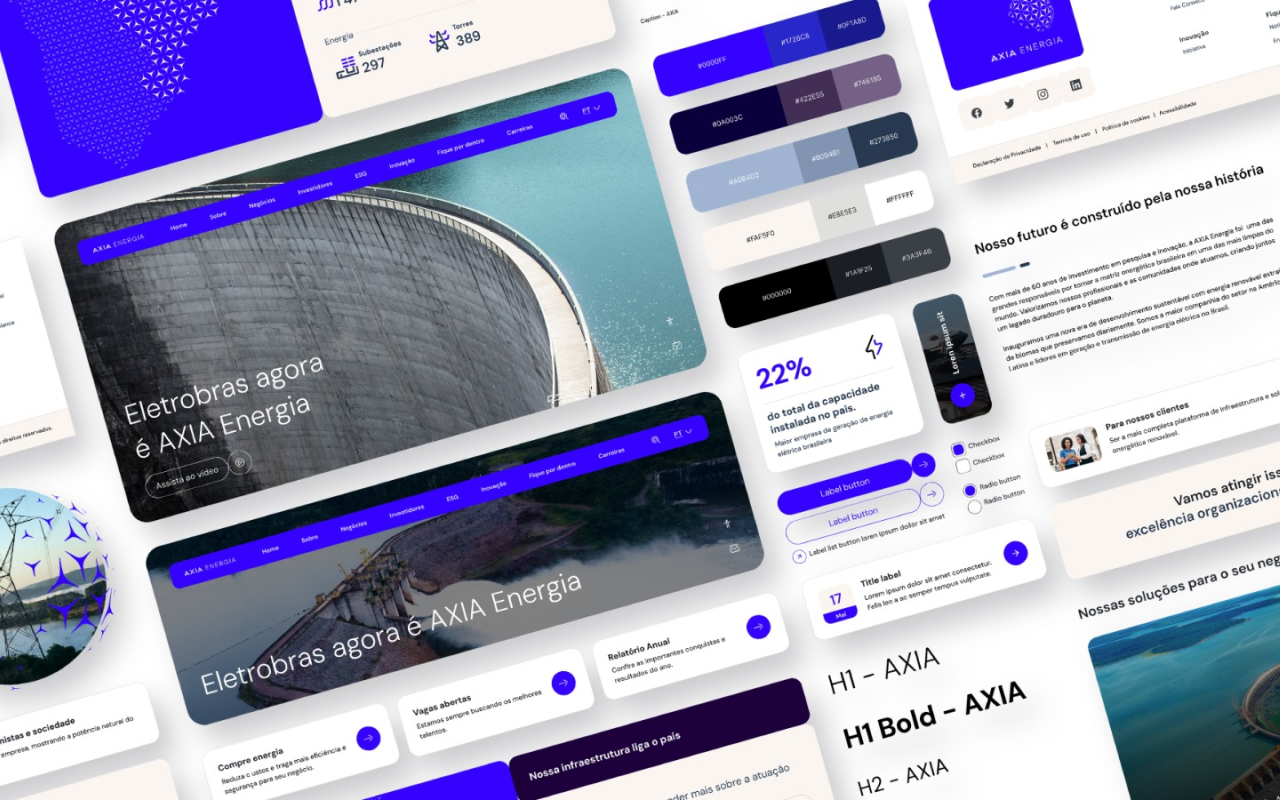
Eletrobras went through privatization with a simultaneous brand repositioning. The new brand, Axia, was developed by Tátil, a Rio de Janeiro branding studio. The digital experience was designed from that new brand identity outward.
The challenge was structural. Eletrobras had historically operated as a group of regional companies, each serving a different part of Brazil. Privatization brought centralization, all of those entities needed to coexist within a single digital ecosystem, without losing their regional relevance or the specificity of their audiences.
The audiences themselves were extreme in their diversity: retail energy clients, industrial clients, investors, government, press, job seekers ranging from C-suite executives to field technicians, and the internal communication needs of the department managing the site itself.
Discovery mapped the full landscape of audiences, content needs, regional entities and internal communication pressures. The breadth was unlike most digital projects, from a retail client checking their bill to an institutional investor conducting due diligence, from a journalist to a field technician applying for a job in a specific region.
Regional complexity added another layer. Each former subsidiary had its own audience base. The new unified platform needed to identify where a user was coming from and serve contextually relevant content, without exposing the full complexity of the organization behind it.
Internal communication pressure shaped the architecture significantly. The department managing the site had a long queue of content needs from across the organization. A site with only a hero slot would become a bottleneck and a political problem. We designed dedicated communication areas into the architecture, giving internal stakeholders well-designed spaces for their content and creating a sustainable governance model.
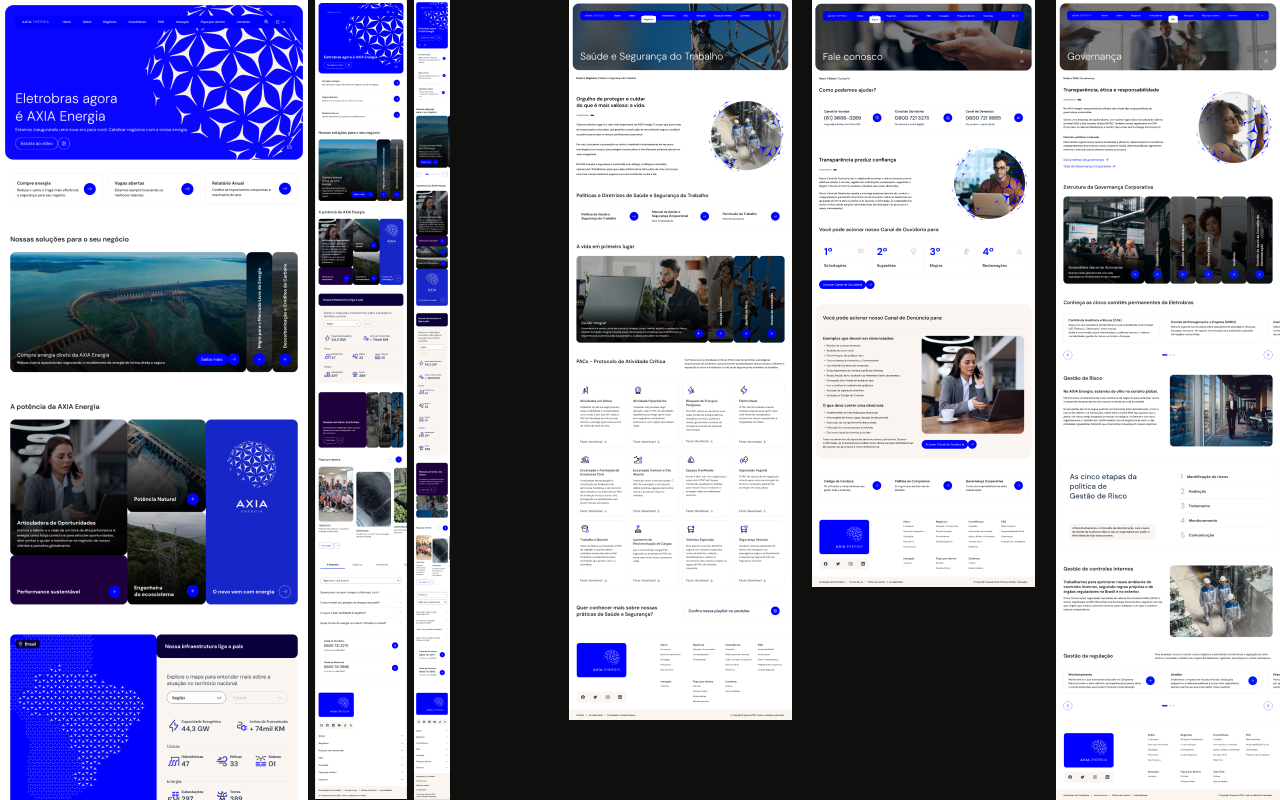
Regional audience strategy. A system to identify a user's regional origin and intent, serving contextually relevant content within the shared architecture. Certain page sections adapt to the regional context when relevant, others remain universal. No separate sites, no fragmented experience.
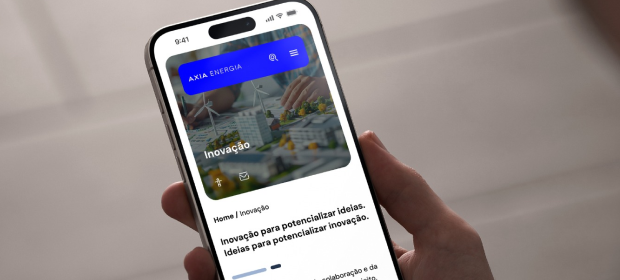
Modular template system. A library of components and page templates covering every communication need, from standard institutional pages to emergency climate communications, from regional content to investor relations. Each template designed to be assembled by the internal team without design support.
Dendrite image system. The Axia brand identity introduced a visual element called the dendrite, a three-pointed geometric form. We developed a system for constructing editorial images using the dendrite as a compositional element, giving the site a distinctive visual language scalable across all content types and contexts.
Documentation. Usage manual and evolution guide covering the full modular system, enabling the internal team to build new pages, adapt templates, and extend the system to new communication needs without external dependency.
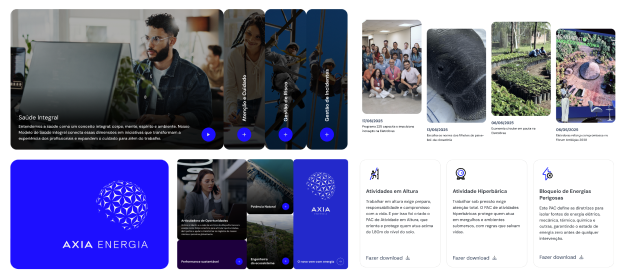

The dendrite, a three-pointed geometric element from the Axia brand, became the foundation for a scalable editorial image system. We developed the rules for how it could be used compositionally across photography, illustration and graphic content, giving the site a distinctive and consistent visual language regardless of content type or regional context.